Thursday, 22 April 2010

The Legend of Trond


In the younger days, Trond Garmenbane, first son of Arkon, was the greatest of all warriors. Fair and just was he, and in battle he was feared even by the foul things that dwelled beyond the end of the world. He bore the sword Dwimmerbane, and carried the Horn of Mittelgrūn, his steed the mighty Fjalir Fenirfare.


He stood taller than any of his kin, and his yellow hair and beard could outshine even the sun in summer. In his hall hung many trophies, his women carried heavy rings, and many were the songs to his honour. Some say that of his thirteen sons, Arkon loved him the most.


When the Black Stone fell from the heavens, the gods of Aethelingagard argued over who should ride out to destroy it. All the sons of Arkon claimed the honour, but in the end it fell to Trond Firstborn. Alone he rode from the hall of his father.


He rode across the vast lands, over mountains and through forests, he crossed mighty rivers and deep valleys, until at last he came to the Bridge of Lōkarfall. There upon the bridge he met Gudmund Nidfare, his brother. Gudmund told Trond that the Three Sisters had said to him that he who stood before the Black Stone would fall unless he bore a certain rune.


It was widely known that of all of the brood of Arkon, Gudmund Gandmane knew the most about runes and hexes. And so he gave his brother a rune-stone and bade him carry it where he went. Then the brothers parted with a kiss.


At last Trond Honourhold came to the Farthest Point. There, like a broken arrow, protuding from the flesh of the world, he saw the Black Stone. The oceans beyond the land thrashed and screamed in pain and rage. From that point he could see afar, and he saw a great people destroyed by that which had come upon the world.


There Trond also saw the great dragon Nefrangap, friend to his father, doing battle with the foul Shard of Goran. He drew Dwimmerbane, his sword, and blew a mighty note from the Horn of Mittelgrūn, and thus he charged forth to do battle.


Nefrangap then smote the Black Stone with all his might, shattering the dark pillar. From it a long shard flew, and pierced through the heart of Trond Fairmane. He fell to the ground and there he died.


Gudmund Brotherbane, in his cloak of raven's feathers, had stolen after his brother, for he had given him a fell rune that would cause the death of he who bore it. When he saw that Trond Ironhand fell he was glad, for he was jealous of the love their father gave to his oldest son, and long had he awaited this moment.


He then flew on dark wings to his father's hall with the ill tidings of death. Gudmund Blackheart told his father that the wyrm Nefrangap had been poisoned by the Black Stone. He told that when Trond Whiteshield had struck the foul pillar Nefrangap had gone mad, and that it was the dragon who had slain his brother.


Upon hearing these ill and terrible news, Arkon roared in anger and grief. He donned his mail and took Fengir, his spear, and in all haste he rode to avenge the death of his dearest son.


When he came to the field of the battle he found the noble Nefrangap standing over the cold body of his son. Then Arkon became blind and deaf from the pain in his heart and he attacked his friend with furious anger.


Nefrangap had seen the the malrune, and knew what had passed, for he knew all the runes and every spell. He called to his friend Arkon, but naught did it avail, and so the greatest of all dragons was driven into the dark hole where the Shard of Goran had stood.


Arkon then closed the entrance and placed many great seals on it and forbade his kin to ever open it. To Trond Silverheart he built a tall barrow and placed him in it. Many great and precious gifts did he lay down with his most beloved heir, and he cried over the grave for seven nights and seven more.


Of Gudmund Silvertongue there are many tales, but none tell of his death.

Wednesday, 21 April 2010

Languages of Argos


Low Speech
Erian (Common Tongue)
The language spoken by Erians from Livonia in the north, to Tauros in the south. It is a mix of several old languages, and each nation has its own, very distinct dialect. A Pendrellian captain may haggle over the price of wine with an Alemani merchant, but both will find it difficult to keep a conversation about something outside their common business flowing. Erian is essentially a pidgin tongue, and as such no established linguistic rules exist. 


Skythic
Diplomats, nobles and scholars look at the Erian language with disdain. It has been said that you speak Common to your dog, but with your peers you converse in Skythic. The language hails back to the old Skythian Empire, and most works of litterature are written in Skythic.


Erian characters: 1 dot in Academics includes literacy and knowledge of Skythic.


Inbaric
The many tribes of the Hannuman Caliphate are united by the common language of the ancient Inbari. It is spoken in desert tents, in the caravanserais, and in the magnificent cities of the Caliphate.


Rukuwarian
The peoples of the Eastern Principalities trace their origin back to the Rukuwar tribe that settled the lands east of the White Ocean in the second century of Enlightenment. While Erian is spoken by merchants in the White Ocean ports, commoners speak nothing but Rukuwarian, and nobles will often deny knowledge of any other language.

Grawbehn
The realm of the Wolf Lords, Draccia, has its own language, and few outside the port city of Grayhaven speak anything but their distinct, harsh language.

Güthrakh
The foul tongue of the Orc.


High Speech
High Skythic
A complex language, almost unchanged since the days of the Erian Empire. It is the ceremonial language of the Temple of Man Supreme, and is concidered the youngest of the High Tongues. Most texts from the last centuries of the Second Age is penned in this language.


Aryadic
Predating High Skythic, this High Tongue is seldom used outside the Realm of the Hermetic Order. It is sometimes referred to as Wizard's Speech, or Arcane, and in the Pogroms of Southern Eria being able to read Aryadic is concidered heresy.


Abyssal
The origin of Deepspeak is unknown, but some scholars -- of the few who are aware of its existence -- believe that it was the language of an ancient civilization that once lay on the northern shores of the Dark Continent. The few written examples, mostly fragments of stone tablets, have all been found in forgotten ruins in the Colonies. What is known is that Abyssal has strong connections to the Abyss.


Learning Abyssal brings with it dangers to the soul, and each time a new dot is purchased, roll Humanity - current dots.

Endarin
The Elftongue is said to hold great power over all things in Creation.


Dead Languages
The tribes of the old Skythian Empire each had their own language, but today these are only spoken by people in secluded regions, or by nationalist orders and lodges tracing their roots to before the Covenant. These days, the written languages of old can be found on runestones and in a few ancient texts.

These languages include:
• Penderii
• Alemani
• Livonian
• Wezelli
• Narbonese
• Aragania
• Rôharan
• Materassi


[Picture source: Economic History Blog]

Historical References: the Inn

At the Sign of the Prancing Pony
Artist: Ted Nasmith

Inns are old classics in fantasy litterature, movies and roleplaying games. Therefore, this post is about the inn, the starting-point of countless stories. One might even say that English litterature began in an inn, in Chaucer's Canterbury Tales, where the pilgrims meet in The Tabard. The inn is a place of chance meetings, it is a safe haven for the weary traveller, it is a place of danger where thugs wait for the next brawl, and much more.


Perhaps the most famous inn in fiction is the Prancing Pony, from Tolkien's Middle-earth, where the charming, although somewhat simple, innkeep Barliman Butterbur does his best to keep his patrons safe and satisfied. It is also the setting for one of the most iconic inn-scenes ever, where the heroes first encounter the dark, mysterious stranger sitting alone in the shadows. How many have not played that same scene more than a couple of times? I know I have.


The history of the inn dates back to the Roman network of roads that bound the Empire together. In the middle ages, a traveller could often find lodging in monasteries along the road, but as the numbers of pilgrims and travellers grew, inns sprang up to meet the demand for accommodations.


White Hart Inn sign

The signs of old inns tended to depict, as litterally as possible, the name of the establishment. As the customers were often illiterate, a sign depicting an actual white hart, or a prancing pony, sent a much clearer message than a collection of letters.

Throughout the sixteenth and seventeenth century, England and other European countries passed laws regulating inns and public houses. In England, the landlord of an inn was required to repay any property stolen from a guest three-fold, and standards of cleanliness were set. As early as 965 CE, King Edgar of England decreed that there should be no more than one alehouse per village.

The public house, or alehouse, differed from the inn in that it rarely offered lodging. Where the inn more often than not would have stables, a common-room, beds and a kitchen, the pub could be as simple as a one-room building with little more than rough-hewn tables and benches for the patrons.

In larger cities, inns also served as long-term lodgings for wealthier merchants or noblemen while they conducted business in town. Some also served as a court away from court for royalty and their supplicants -- something less formal, and perhaps somewhat more relaxed. 

Tuesday, 20 April 2010

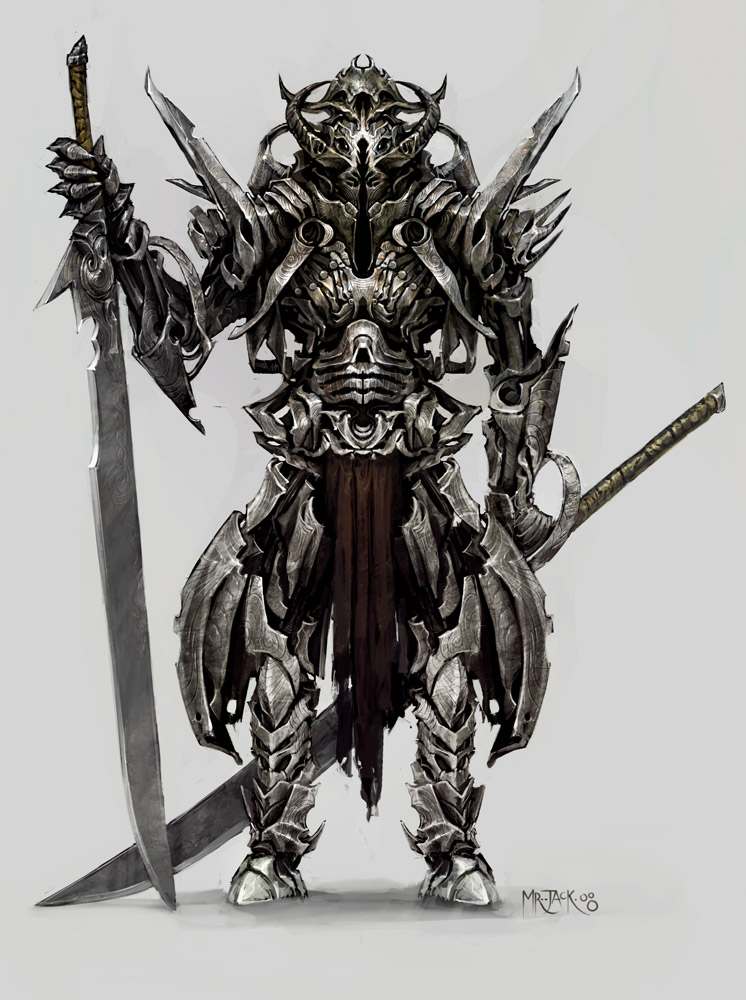
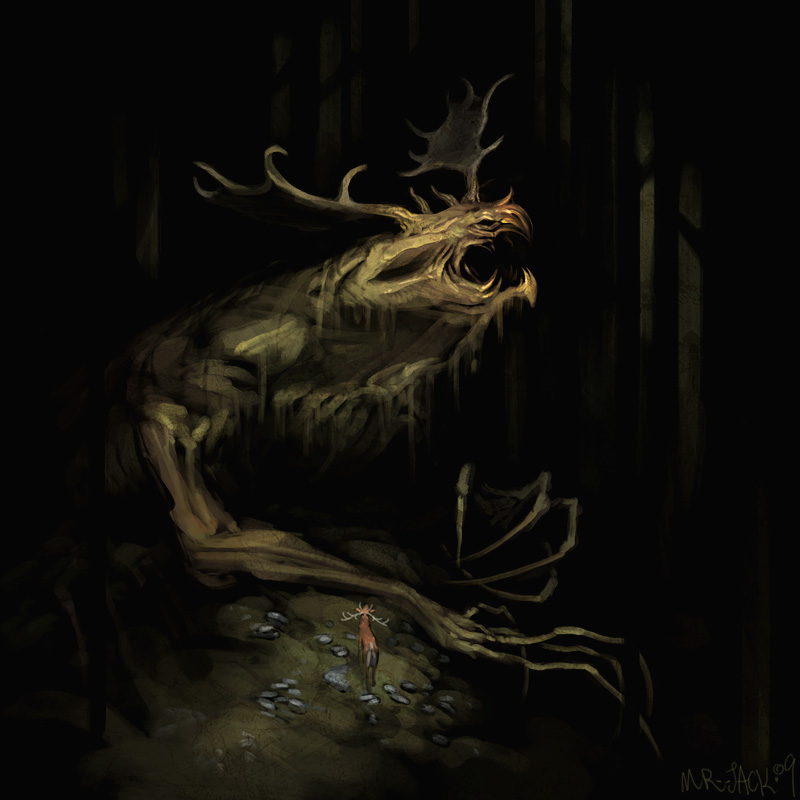
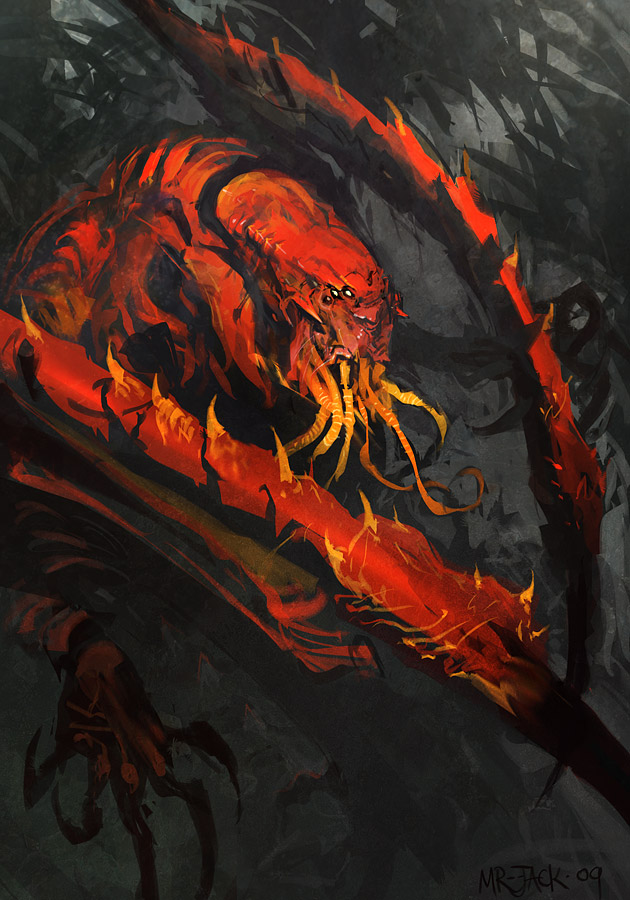
Featured Artist: Mr. Jack

Just a quick post before going off to earn a living. Thanks to Nathan Long of Sabrepunk for the tip. Ladies and gentlemen, I give you Mr. Jack.

Undead Warrior 2


Demon Samurai


Forest


Lictor

All pictures hosted by: Deviantart

Monday, 19 April 2010

Historical References: Amsterdam

This reference-post is devoted to the city of Amsterdam in the 17th Century. This is definitely the most direct inspiration for the city of Rederhafen.

By the early 1600's, Amsterdam was the center of world trade [...] The seventeenth century saw the Dutch Republic become the center of a cultural flowering much as Italy had been during its Renaissance. Along with money to patronize the arts and sciences, the Dutch Republic had both a free and tolerant atmosphere and enterprising spirit willing to challenge old notions and creatively expand the frontiers of the arts and sciences.  

Amsterdam, 1702


Dutch East India Warehouses, 17th Century
Hosted by: AllPosters.com


Amsterdam Harbour, c. 1700 CE
Hosted by: Life.com


Typical canal house, c. 1600 CE
Hosted by: TravelPod


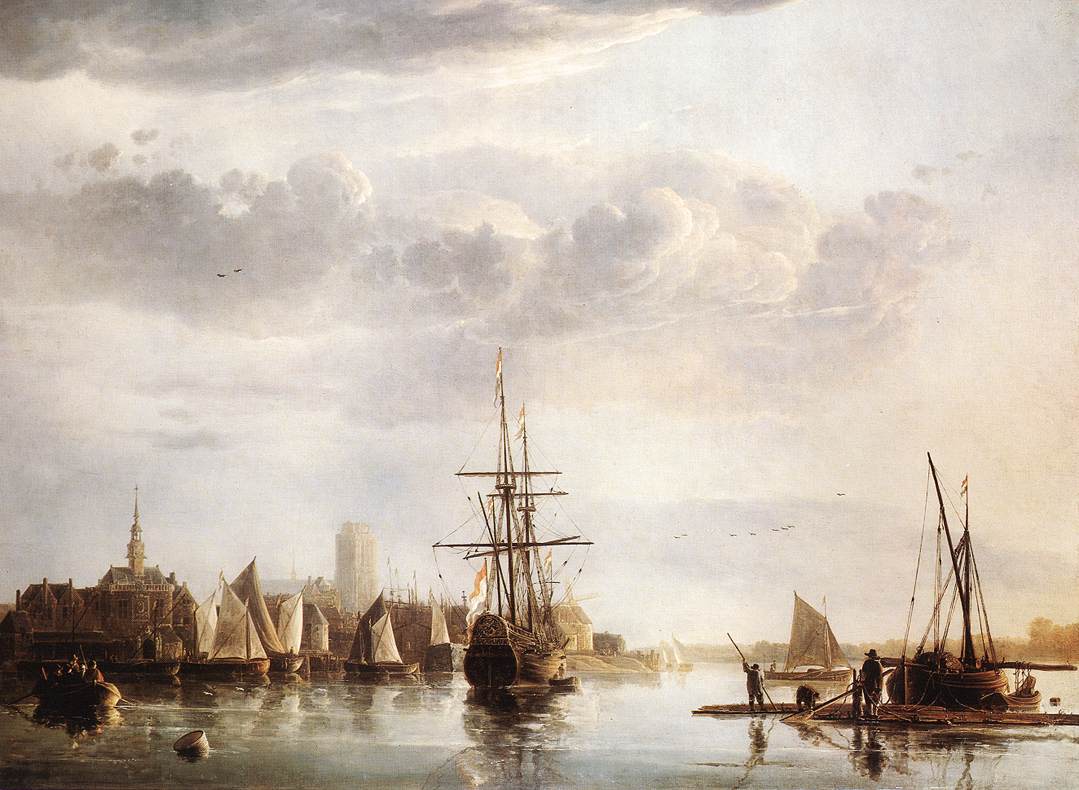
View of Dordrecht, by Aelbert Cuyp - 1655 CE
Hosted by: Lib.Art.com


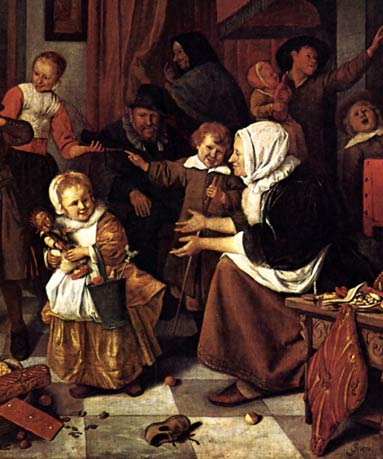
Dutch familiy, c. 1600 CE

Solomon Kane


It is about time this blog mentions the upcoming movie about R. E. Howard's awesome character Solomon Kane, if for no other reason than that the kick-ass Puritan may very well be the original inspiration for the world of Argos. It has been released in a few countries already, but I have no idea as to when/if it comes to this corner of the world.


Links:

Amazon.com
IMDb
The Cimmerian

Sunday, 18 April 2010

The last chapters

Artist: Ken Matheson


There are few things more awesome than when the players take control of a situation, and when they know what they are doing. This happened the last session.

The current story-arc has lasted two nights now, and it might have started a bit hard. Then again, sometimes the antagonists have to strike back.

What happened was more or less as follows.

The minions of the Exarch, led by the nefarious Queen of Stars, had orchestrated an attack on Wezell, the realm where the forces of Creation are marshalling. The attack was well planned, and involved a wide range of the assets available to the enemy.

The Black Ship Kraken, under Armand, landed several large crates along the Wezellian coast, where Shaitani-cults took over the cargo. From there they were transported to six different Hallows, located on key positions throughout the realm. When all was ready, Mr Corvin went ashore in the capital, Rederhafen.

Even before the enemy plan could spring into motion, the heroes complicated things for their adversaries; the Miracle of Arkon, where the remnants of the beleaguered Host of Man was brought back from the Dark Continent changed the balance in Wezell considerably -- seventeen thousand veterans from the War of Creation, including Wolf Lords and a few cabals of magicians, from the war on the darkness now stood less than a dozen miles from Rederhafen.

The heroes of the Pius Cabal first became aware that something bad was happening when Mr Drake, the cabal's Spirit and Life magician, encountered a swarm of rats leaving the city. When they looked into it, they found that shit was indeed about to hit the fan.

What happened afterwards is described in
the Last chapter of 28 March 2010.

After having defeated Armand, they returned to business -- this time that of crowning a king (see
G. Galan's Journal).

However, when they came back to Rederhafen they found that even if the fires in the harbour had been put out, all was not yet well. Apart from a nasty plague quarantine in a neighbourhood in the city, the very ground beneath Wezell was sinking.

On the night of the attack, cultists had planted some kind of perverse larvae in six Hallows. These demonic entities had quickly grown into enormous wyrms, and unless they were somehow contained, they would destroy the land; measurements along the coast showed that already the tide had risen an inch. Now, this was taken care of -- Wolf Lords, other magicians and priests from the newly founded Arkonshōv were doing what they could to slow the progress of the foul creatures, and the Syndicate had started the construction of dikes along the seashore.

The problem Onkel Jap van Zaar, the cabal's Wezellian patron, handed over to the heroes was a prisoner; Mr Corvin had been captured after the attack, and since then he had been most cooperative, answering any question put before him. Still, the Board of Onkels was divided. The cabal was asked to go talk to the prisoner.

After having established that Mr Corvin was indeed a foul agent of the Exarch, and after having decided that he should be killed, they signed a waver transferring the prisoner to their custody. The small snag was that he had some sort of ring around his neck. They had tried to ascertain what it was, and what he was, and hadn't really found out much. Still, Prince Aegir went into the dungeon and executed Mr Corvin.

As the sword hit, the ring shattered, and hell broke lose. As it happened, Mr Corvin was not much more than a very smart bomb, or rather, when the ring broke, the horrible demon bound in human flesh were freed. Luckily van Zaar is a Master of Time, and so he undid the fatal last second, stopping the execution.

This is where the chapter ended and the next one picked up.

And this is where I was baffled.

I was half expecting them to build up for a confrontation with the demon. Instead they did a tour-de-force of every major player and faction they knew. Having Masters of Time and Space in the group meant that they were able to cover a lot of ground.

They even found time to lead King Rowar II of Pendrell to Hûron the White, the Lord of the Frostelves. The king, seeing no other solution than to beg the Elven Prince for mercy. It was granted.


After having brought in Hermetic wizards, elves, Svārtsmiths of the North, and five hundred Wolf Lords, and after having found out as much as they could about their particular problem, the Pius Cabal made its move. They took Mr Corvin to a remote location and bound him with right powerful magic deep in a mountain. This was also Drake's Masterpiece, by the way.

About two hundred of the Wolf Lords stayed behind to guard the entrance to the caves where the demon was bound.

And so it happened that a great evil was locked away by a group of heroes. This is the first time I've seen this happen. Normally it works the other way around: For some reason, the heroes find/unearth some great evil that was somehow, and for some reason, locked away in bygone days. As a bonus, the cave in question was the very same that once gave birth to the Book of Worlds.

The really neat thing was that I just sat back while players took the story from the brink of destruction to a quite prosaic conclusion, or at least a solid temporary solution. They may or may not return to make an attempt at dealing with the problem once and for all (I do believe that will be the first thing to be decided next time), but for the time being the world is safe.

The minions of the Exarch, guided by the Queen of Stars, struck hard at the power-base of the heroes, and they were defeated. Armand is dead, partially due to his own hubris -- his number one flaw. Due to the sudden appearance of the Host of Man immediately before the attack, neither plague nor wyrms were allowed to wreak the anticipated destruction. More importantly, Mr Corvin was meant to fall in the heroes's lap, and even if they almost died, they managed to avert the localized End of the World that was planned for them. The evil witch-queen's plot was foiled.

A good group is often clever, but every now and again they are damned ingenious. The guys walked deep into the trap the first night, but got out alive and in style the second. I'm now wondering what the bad guys will come up with next.

Bloody well done, guys!

Friday, 16 April 2010

Word: Happiness

Origin: Happiness as referring to joy and... well, happiness, is a relatively new concept. Originally it meant being lucky. The word happy is derived from 'to happen', or 'happenstance', as in good luck. A man who had experienced good fortune was said to be a happy man.

Source: Herbert Bronstein, Happiness, and Merriam-Webster's Online Dictionary

Sigurd Dragedreper


Hosted by: VG.no


This is a Norwegian movie from 1989, about the young earl-son Sigurd, named after the old mythic hero Sigurd Fåvnesbane. It is a true Coming of Age story set in a fictive Norway sometime around 1000 CE, give or take a hundred years.

It's quite a neat film, even if it focuses a lot more on the message than on either the legend or the history. There are a few reasons why I put this one up. One is that I remember I thought it was kinda good, although severely politically correct, even back then. Another is that a lot of the movie also dovetails quite neatly with certain parts of the Argos mythology, although just not that social-romantic.

Anyway, I have no idea if any foreigners will be able to stream it from the NRK servers. Also, the movie is in Norwegian, no subtitles, so there you go.


LINK

Sunday, 11 April 2010

The Journal of Captain Gryff Galan


We returned to Rederhafen. Bansl, still high on his Mastery, was eager to put out the fire, and took matters into his own hands, so to speak. Had he not been stopped he would have gone on to put the entire fire out himself.

To avoid chaos breaking out in the city, Verasius, Adeptus of the Ordo Hermetica, was given the task of taking control the remaining flames. Which he did.

The Tradesmaster was sent down to the Prince. His quarters thick with gloom when our man Drake came in with The Light of Life in his hand, giving air to the room and aid to the Prince.

Meanwhile, on deck was El Rey Mistario. A joyful sight, indeed. Though he was not as joyful himself. ”So, it has begun”, he said, staring into the flames. We greeted him, all except Yolander, who had been sent away by the emerging M’Narcl. ”You are back amongst us, at last!” ”It has been a long journey”, Mistario whispered. He is still frail.

Yolander, clear-sighted as he is, pointed out the significance of the death of Captain Armand of the Kraken. The Exarch does not produce strategically gifted brains. We took out his Number One.

I located Rowar II 7 miles south of Stafford, at Sander Bridge. And after Arkan (Arcrash getting his names confused), a tad impatient, had walked out, the rest of us quickly agreed on the course of action. I found the Royal Crown of Pendrell, Bansl apparated it out, and we travelled to the soon to be King by portal.

I was pleased to find someone trying to hinder our arrival. And even more pleased to learn that it was, as I suspected, the Argonauts, who had flocked around Rowar, the New Hope of Pendrell. There was Commander Sir Geoffrey Colomb, and 32 others. We also learned that all the Navicrons have fallen into enemy hands.

At The Crowning, The Prince Exalted spoke to The King. He has a truly fantastic presence, and speaks both sense and wisdom. ”A Crown can not be given”, he said. ”It must be taken”. He has really found his footing now, since he killed The White Stag. He will unite Man.

32 000 men on our side. 12 000 men, better equipped, are positioned to hold Sander Bridge. ”Where you cannot cross, you go around”. Not only will we cross, we will empower the Argonauts in doing so, by making them a part of The Crossing.

In The Ambush at Sander Bridge we lost 1700 men, and killed four times as many. Three thousand were captured, and three thousand fled. 8000 Repeating Rifles were won.

Valdvix, the Blue Fox, was so named by his Master.

And the King has Awakened. He was given a book I found in the library of the Blackfriars, The Mind of Man, as a parting gift.

What a day! We have crowned an Awakened King in Pendrell. The Parliament is surrounded. When it rains, it really pours.

---

Storyteller's note: This is The Captain's first post. He has been suckered agreed to do the write-ups of the weekly sessions. These posts reflect his views and experiences, and hopefully the other guys will speak up if their opinnions differ radically. I may add pictures, but apart from this note, I will only add my observations as comments.